The Law of Being: Two More Instantiations — Babe Ruth and Lou Gehrig
THE LAW OF BEING: TWO MORE INSTANTIATIONS -- Babe Ruth and Lou Gehrig
THE LAW OF BEING: TWO MORE INSTANTIATIONS
Babe Ruth and Lou Gehrig
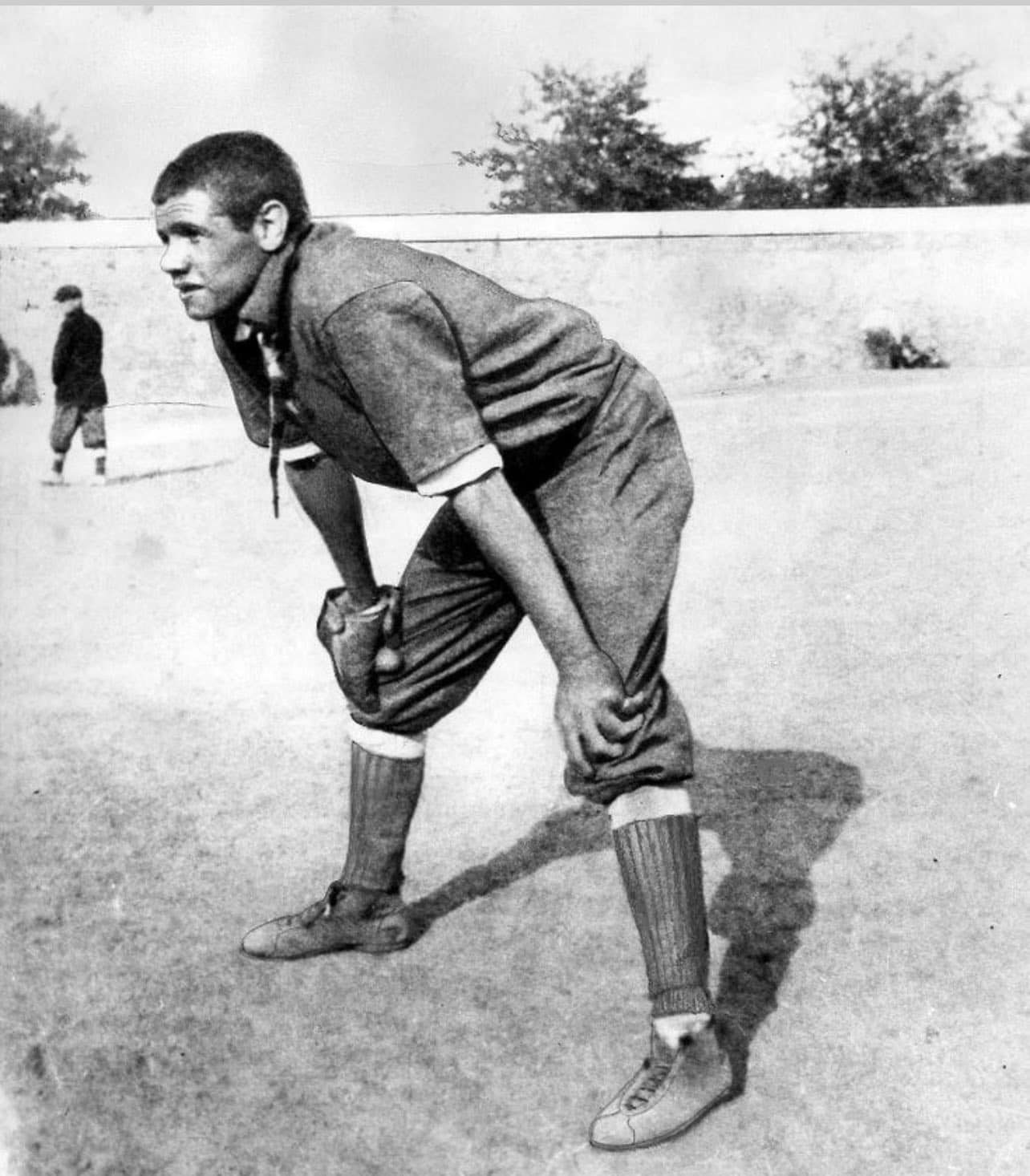
I. THE REFORMATORY
George Herman Ruth Jr. was born in 1895 in the Pigtown neighborhood of Baltimore at 216 Emory Street; later living above his father’s saloon on West Camden Street. Of eight children born to George and Kate Ruth, only George Jr. and a younger sister survived infancy. The family had little time for the boy. His father ran the saloon. His mother was chronically ill. By the time he was six years old Ruth was roaming the Baltimore waterfront, stealing from the saloon’s bar, fighting in schoolyards, and accumulating run-ins with the law that the family could not manage and did not try to.
At age seven, his parents had him declared an incorrigible and committed him to St. Mary’s Industrial School for Boys — a reformatory and orphanage run by the Xaverian Brothers on Wilkens Avenue, several miles outside downtown Baltimore. He would spend the next twelve years there.
This is the formation structure. Not poverty alone, which was pervasive in Baltimore’s working waterfront neighborhoods. Not difficult parents, which was common. The specific thermodynamic event was commitment — removal from an environment where lower free energy states were available and placement inside an institution where they were not. St. Mary’s was bounded. It was regulated. It operated on a rigid daily schedule of Mass, classes, vocational training, prayer, and baseball. The boys were called inmates. Desertion was rare because the Brothers enforced coherence. Ruth later said, “Perhaps I would always have been incorrigible, but for Brother Matthias, the greatest man I have ever known.”
Brother Matthias was the school’s prefect of discipline, a 6’6” man who could hit a baseball with one hand farther than most men could with two. He recognized what was in Ruth and organized it. Ruth estimated he played 200 games a year at St. Mary’s, working through every position before settling as a pitcher. He learned shirt-collar manufacturing as his vocational trade. He was not going to need it.
By his late teens Ruth was the best pitcher at St. Mary’s by a distance that had begun attracting outside attention. In 1914, Jack Dunn — the same man who would later sell Lefty Grove to Connie Mack — watched Ruth throw for less than an hour and signed him on the spot. Because Ruth was still nineteen and a ward of the school, Dunn had to serve as his legal guardian to complete the contract. Ruth had spent twelve years in an institution that made lower free energy states structurally unavailable, with a single discharge pathway open: the baseball field. What arrived in professional baseball in 1914 was the output of that formation.
The instrument was not a hitter. Not yet. Ruth entered professional competition as a left-handed pitcher. In 1916 he went 23-12 with a 1.75 ERA — the American League ERA title — and pitched nine shutouts, a Red Sox franchise record that stood for 62 years. In 1917 he went 24-13 with a 2.01 ERA, leading the majors in complete games. His World Series scoreless innings streak of 29⅔ innings stood as the Fall Classic record for 42 years. He was already, purely as a pitcher, a plausible Hall of Fame argument.
But the formation had also produced something the pitching role could not fully contain. Ruth was hitting baseballs distances that had no precedent. In 1919, still primarily a pitcher, he hit 29 home runs — more than any player in major league history to that point. The following year, converted to the outfield with the Yankees, he hit 54. The year after that, 59. The run scoring environment of the Live Ball era was approximately 5.0 runs per game. Ruth was operating at an OPS+ of 206 — meaning he produced at more than twice the league average rate — sustained across a career that combined two categorically elite performances: one as the best left-handed pitcher in the American League, one as the greatest offensive force the game has ever measured.
The all-time OPS+ leader. The all-time slugging percentage leader. A career ERA of 2.28 as a pitcher. 714 home runs. Seven World Series championships.
The framework does not have a higher-output case. St. Mary’s produced an instrument that was not one elite performer but two, operating sequentially in the same body — and the hitter that emerged was so far beyond what the environment could contain that it restructured the game itself. The Deadball era ended in significant part because Ruth made the home run a viable offensive strategy, which changed how baseball was played at every level. The equilibrium of the sport bifurcated around what he produced. This is EVG operating not just as a measure of individual performance but as a measure of environmental restructuring — the player whose output was so extreme it changed the baseline against which all subsequent players would be measured.
He never forgot St. Mary’s. He brought the school band on barnstorming tours. He visited orphanages throughout his career. He said once, “No one knew better than I what it meant not to have your own home, a backyard, your own kitchen. That’s why, even when the big money was rolling in, I’d never forget St. Mary’s.”
The formation stayed with him because it was him. You cannot separate what came out of St. Mary’s from what the game recorded. They are the same event.
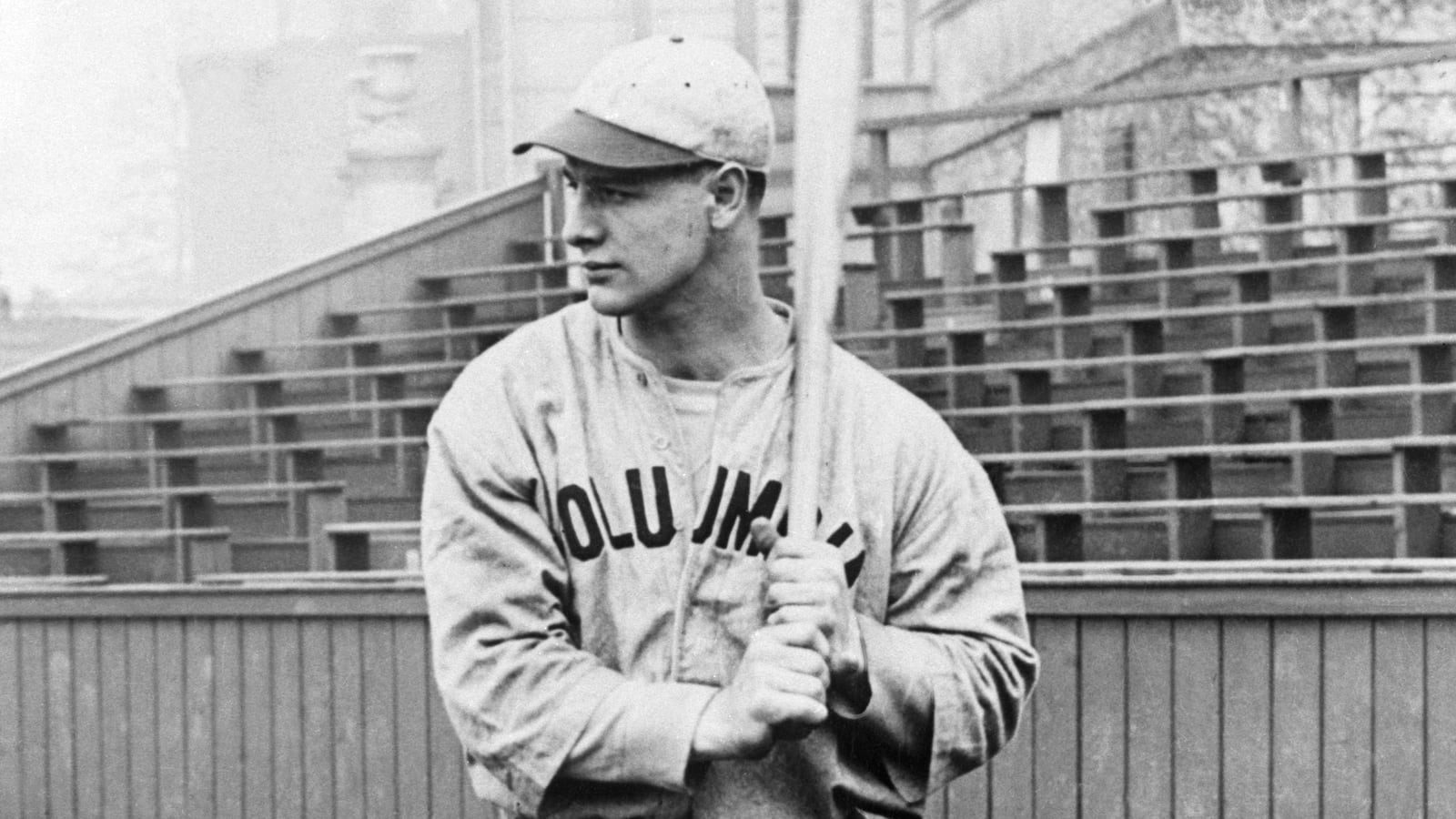
II. THE TENEMENT AND THE IRON
Heinrich Ludwig Gehrig arrived in New York from Baden, Germany in 1888. His wife Christina came from Schleswig-Holstein in 1899. They settled in Yorkville, the German immigrant section of Manhattan’s Upper East Side, in a tenement with no boiler, no radiators, kerosene heaters in winter and a bathtub in the kitchen. Heinrich was a sheet-metal worker by trade, frequently unemployed due to alcoholism and epilepsy. Christina was a maid, a laundress, a cook. She worked constantly.
Of the four children born to Heinrich and Christina Gehrig, three died in infancy. One survived: Henry Louis, born 1903. He was the only one.
The formation pressure here is not institutional constraint in the Ruth sense — no reformatory, no bounded structure enclosing the child. It is the specific thermodynamic signature of immigrant poverty in New York in the early twentieth century: a father who cannot hold work, a mother whose labor is the family’s sole operating margin, and a boy who is the only product of that line who made it out of infancy. The weight of that survival — three dead siblings, a mother who carried the household alone, a father who did not — organized itself in Lou Gehrig as something that became visible on a baseball field as an absolute refusal to stop.
Christina Gehrig did not want her son to play baseball. She called it a schoolyard game, wanted him in engineering or architecture, steered him toward Columbia University. Gehrig enrolled on an athletic scholarship in 1921, his mother working as a cook in the fraternity house where he lived, delivering the laundry he helped carry. The formation pressure was explicit: get out of what we came from. Education was the pathway she saw. Baseball was a distraction.
It was not a distraction. It was the field on which the formation expressed itself.
Gehrig signed with the Yankees in April 1923 for a $1,500 bonus — enough to move his parents out of Manhattan to the suburbs, which was the first thing he did with the money. On June 1, 1925, he replaced Wally Pipp at first base and did not leave the starting lineup for fourteen years. Two thousand one hundred and thirty consecutive games. Through broken fingers, back spasms, a fractured hand, fevers, and conditions never publicly identified at the time. He played because stopping was not a lower free energy state that was available to him. The regulatory architecture had been set by a mother who worked without stopping, in a household where stopping meant dissolution. The instrument did not stop. It was not built with a stopping mechanism.
The statistics across those fourteen years: a .340 career batting average, 493 home runs, 1,995 RBIs, a career OPS+ of 179. Triple Crown in 1934 — leading the league in batting average (.363), home runs (49), and RBIs (165). Six World Series championships. The most career grand slams in major league history when he retired. Eight consecutive seasons with 100 or more RBIs. The man batting behind Babe Ruth in the most feared lineup in baseball history — his RBI totals exceeded Ruth's in multiple seasons, and in 1927 the Baseball Writers voted Gehrig the MVP over his more famous teammate.
The formation signature is not charisma. It is not excess. Ruth had both in quantities that have never been replicated. Gehrig had neither. What Gehrig had was the regulatory structure of a boy who survived when three others did not, who watched his mother carry a household that his father could not, who took the money and immediately moved his parents before spending anything on himself. The consecutive games streak is not an athletic achievement in the simple sense. It is a formation expressing itself as presence. Every day. Without stopping. Because stopping was not what the formation had made available.
On May 2, 1939, Gehrig walked into manager Joe McCarthy’s office in Detroit and said, simply: take me out. He had played in 2,130 consecutive games. His hands were failing. His legs moved through water. He had been to the Mayo Clinic. The doctors told him he had amyotrophic lateral sclerosis. Terminal. Incurable.
On July 4, 1939, between games of a doubleheader at Yankee Stadium, before 61,808 people, Gehrig stood at home plate without notes and said the thing that defines the formation more precisely than any statistic: “Fans, for the past two weeks you have been reading about a bad break. Today I consider myself the luckiest man on the face of the earth.”
He was dying. He called it a bad break. He called himself lucky.
This is not stoicism performed for an audience. It is the authentic output of a regulatory architecture built by Christina Gehrig’s kitchen, by three dead siblings, by immigrant poverty in Yorkville, by laundry delivered in winter. A system that had never been organized around its own suffering — that had always externalized the load into output rather than inward complaint — could produce no other response to a terminal diagnosis. The formation was not separate from the speech. The speech was the formation, stating itself one final time.
He died June 2, 1941. He was thirty-seven years old.
III. THE COMPARISON
Both men: institutional and economic constraint, no buffered childhood, formation complete before professional baseball began. Both produced output so far beyond the equilibrium of their environment that the environment had to reorganize around them.
The divergence is the character of what the constraint produced.
Ruth’s formation at St. Mary’s was bounded enclosure — twelve years inside institutional walls with one discharge pathway. What came out was ungoverned appetite operating at maximum amplitude in every direction simultaneously: eating, drinking, women, baseball. The boundary of the institution did not teach regulation. It concentrated energy until it reached a threshold and then released it into the world as everything at once. The greatness and the excess are the same formation expressing in different channels. Ruth did not have a stopping mechanism because St. Mary’s did not build one. It built a pitcher who became a hitter who became the largest individual disturbance of a sport’s equilibrium in recorded history.
Gehrig’s formation was relational constraint — immigrant poverty organized around a mother’s perpetual labor, three dead siblings, the specific pressure of being the only one who survived. What came out was governed continuity: show up, produce, do not stop. The formation was not an explosion released from a bounded enclosure. It was a steadily maintained output, day after day, against a regulatory cost that was always paid and never advertised. Gehrig did not generate the same amplitude of disturbance per season as Ruth. He generated it across 2,130 consecutive games without interruption, and then stood at home plate dying and called himself lucky.
Two formation types. Both at the extreme of what the law predicts for low-fallback, high-constraint systems with intact regulatory capacity. One concentrated and released as maximum amplitude. One maintained as maximum duration. Between them they cover the full range of what formation produces — the eruption and the iron, the Bambino and the Horse — and both came from the same thermodynamic source: childhoods that made lower free energy states genuinely unavailable, leaving only baseball and what baseball would let them become.