Five Lectures: An Injection Pack -- Existential Science (11/6-11/9, 2026)
Substack / source: https://davidbussellarchive.substack.com/p/five-lectures-an-injection-pack-existential
Lectures & recordings
- The Cosmological Problem of Subjectivity -- A Lecture (11/6/26)
- The Occurrence of Being: A Continuation of The Cosmological Problem of Subjectivity -- Lecture 11/7/26
- The Forebrain & High Cognitive Self Modeling Unto Species Systems Revolution (Lecture 11/8/26)
- The Resolution of Experience and Perception: The Emergence of the Forebrain as the Locus of Being (11/9/26 Lecture)
- Experiencing the Self Architectonically: The Evolutionary Architecture of Subjectivity (Lecture -- 11/9/26)
Five Lectures: An Injection Pack -- Existential Science (11/6-11/9, 2026)
The Cosmological Problem of Subjectivity -- A Lecture (11/6/26)
So I want to get to the core of something we’ve been discussing, which is really fundamentally philosophical, literary, cosmological, and scientific: the core of subjectivity itself, which we can only learn about through the novel or the literary form.
The tradition of the superfluous man in 19th-century Russian literature, I think, in particular really gets at this. We’ve discussed Dostoevsky’s Notes from Underground, Rimbaud’s A Season in Hell, and those are really places I want to linger. And Goncharov as well. His entire oeuvre, in my understanding, rests and resides specifically around this most inward problem: the problem of internality, interiority, and depth—that these themselves are the story of the history of the cosmos.
And this is really, I think, one of the fundamental binding threads that allowed me to articulate my ontology. Which is to say, the binding point, or the glue, between Channel One and Channel Two, which is the genome and the symbol, in terms of the cave painting, right?
And we understand both of these as symbolic registers. That the genome is legible. It’s a linguistic phenomenon, just as much as the forge of the stars is legible, in terms of the—I was going to say the neural technology, but the nuclear technology of the stars—the forge which produces the elements, which we then understand cascade down and through spacetime, articulating spheres of information, spheres of transmissibility and transformability, so to speak, recombination, which is occurring in the universe, in everything from the star to the cell, this change that is happening across spheres.
So the point that we get to is the experience of this very high-grade information technology, which is, of course, the forebrain, this very recent evolutionary force of the last couple hundreds of thousands of years, which then produces for us the kind of interiority which we’re able to get through these very piercing and probing, we could say, psychological authors. Anyone from Kierkegaard to Dostoevsky to Proust. And Joyce as well could be considered here.
This is the fundamental thing which is beneath literature, which is, I would say, beneath the arts itself, but first and foremost, you could say, the first-person, or the “I” form of existentialist literature.
When Rimbaud says, “I is another,” what he’s gesturing towards is that the foundation of subjectivity is rather unmoored. The sense of the experience of identity or the self is in large part formed and informed by the existential historical conditions which preceded it.
It’s the experience of an architecture which we ourselves did not create, at least not in a conscious fashion, but rather are passing forward via sexual reproduction.
And so there is, in Goncharov, the fundamental tension being inward existence and outward life. The problem of an interior life meeting and encountering the realities of the world, which is to say, the shifting decades of Russian history at the hinge of the mid-19th century.
And, of course, Goncharov’s subject is the interiority of his subject. So his subject is subjectivity itself: the experience of existence and the appearance of the world to someone or something, that being that which constitutes the lived reality.
And this is the deepest, or most inward, scope of the study of cosmology.
So when we’re studying the principles and foundations of stars or galaxies, how they form, when they form, and why, and how they’re in communication energetically, in an interstellar sense, this is a very high-level abstraction. It’s a high plane of discourse.
And the transmission of these intergenerational stellar forms, over millions and, of course, billions of years, brings us to the evolutionary paradigm of the human being as it stands today, let’s say, in the 21st century, the year 2026, equipped with the iPhone, artificial intelligence, the forebrain, the mechanism of the eye, right? The sensate body, the biology experiencing the cultural paradigm which we now live in, which, of course, I’ve already articulated as bios-culturos, I guess you could say.
So this is the crux, or the intersection, the cross at which any living being stands upon. Simone Weil articulates this as statera facta corporis [quotation uncertain], the reality where the living being stands at the cross, the crossroads, the intersection.
I’m not going to be able to articulate that off the top of my head, especially without coffee, but that’s the statement that she makes, and that’s one of the epigraphs of one of my previous books.
So we have to understand the mystery of subjectivity, right? Because it’s the experience of a technological mode, which is to say, a way of being, that is, of course, accessible at different levels of depth.
So when we read A Season in Hell, we’re reading the articulation of a certain neurosynaptic architecture. We’re reading the articulation of the body of Rimbaud interfacing with historical consciousness.
And this is, of course, when he talks about the Gauls, and when he talks about Frenchness, when he talks about the possibilities of liberation in history, and his understanding of subjectivity being one fundamentally of rebellion, effectively against everything.
This is also the exact kind of nihilism that we hear in Turgenev, and experience in Goncharov, and understand the larger Russian milieu of this time period being deeply influenced by Hegel and by German idealism.
And this is the transmission, of course, across borders of this very fertile form of thought which emerges in Jena.
And where I want to go with this here is when there is literature expressing the depth of the experience of this interiority, what we really are doing is excavating the possibilities of a technological consciousness, right? Something that’s fundamentally founded upon an architectural reality.
And so what we are doing is really excavating a reality, an architectural condition of being, which is not yet truly understood, right?
And this is what’s at the crux of the split between, you could say, science and the humanities: that the humanities are exploring the technological capacities and extent of being human itself.
And scientifically, if we understand this at depth, this is like a technological recursion, that in this highly advanced informational apparatus, we are experiencing being itself through a very specific lens.
Like a genotypic, a phenotypic, and a species lens.
A neurobiological lens, right?
And understanding this at depth is actually excavating a form of cosmological understanding which is not obtainable via simple measurement.
And this is well understood by Goethe, of course, as one of the main historical scientist, philosopher, literary figures.
That it is impossible to draw a real disciplinary gap here in this existential condition.
The issue therein is that we don’t know exactly what the character of being is.
And so a work at sufficient depth of the perception of experience, articulated with sufficient linguistic dynamism, may actually capture that character.
And what I mean by that is that the character of being is that which is beneath the sheaths of information technology which we’ve previously described, in anything from Darwin to cellular architecture to the nervous system, to what we perceive of as interstellar galactic formations.
What we’re tracing there is the character of the energetic structure of existence and creation itself.
And that becomes embodied and recursively magnified through the human experience.
So when we’re reading literature as such, specifically this first-person existentialist thought, or the articulation of the position of the subject in an authentic way, what we are reading is really our only way of seriously being able to begin to interrogate the being’s perception of itself in a fundamental fashion, which is to say, the least degree of abstraction.
This is, of course, different than studying, we could say, phenomenology, neuroscience, psychology, et cetera.
This literature itself being the only form of inquiry capable of sustaining the sufficiently deep interrogation of the being’s perception of itself, the inhabitation of the existential condition, which is fundamentally the cosmological being itself inhabiting this informational technological container of the architecture, we could say, of the human species itself, or whichever species has acquired sufficient sentience to begin this recursive symbolic project of articulating itself in a long form, right?
This is, of course, different than Picasso’s Guernica or, let’s say, a piece by Bach, in the sense that it is a direct articulation of the condition of the subject.
And I’ve previously said that Coltrane’s music in particular is an extremely existentialist movement. A Love Supreme, My Favorite Things, some of my favorite pieces by him, of course.
But these are not, let’s say, direct linguistic articulations, and there’s a subtlety there in terms of the description of experience in a form which is digging at the, let’s say, architectural condition of the subject. It’s kind of difficult to describe semantically.
These existential texts, such as The Fall, or Notes from Underground, or A Season in Hell, are excavations of the condition of the subject.
It’s an attempt to, let’s say, explain or examine via the construct of this communal language, right? And inscribe that experience in a reflective way, or recursive way, that the genome is articulating itself through an externalized symbolic structure, which is the same, obviously, the attempt to outwardly replicate the genomic structure, which we know as, let’s say, English or French or Mandarin, et cetera, right?
And this is the symbolic world of this investigation, which is Rimbaud’s application of French to A Season in Hell, or Dostoevsky’s application of Russian to Notes from Underground.
And this is, of course, where we achieve the transparency of the “I as another,” Rimbaud’s “I is another,” that the subject discovers that it is not a fully transparent structure or assembled individual, but rather it has this vast archaeological depth behind it.
And this is very similar to, we could say, fossils of almost perfectly preserved ancient fauna in permafrost. I’ve already discussed this with amber and insects, that the human being object, right—this is the subject-object continuum here—is the container for this ancient substrate, which evolves up, and the body itself is actually carrying this millennial and multimillion-year processual information in its very form and evolutionary structure.
So this is a dig, really. What it is is an archaeological dig.
And the difficulty here, of course, in a Western scientific sense, is that there has not been sufficient shrift or attention given to the ontological condition of the subject.
Which is to say, of course, the cosmos has been studied and objectified. The nervous system has been studied and objectified. This is the history of anatomy, let’s say, dissection, or Kepler or Galileo, right? Microscopy and macroscopy.
But this is actually a native process, and, of course, where we would think to look is the last place. Or where we would need to look is the last place. Where we would think to look is everything but the place we would need to, in the sense that the cosmos already, in a native, billions-of-years fashion, produces a being capable of perceiving itself.
But, of course, this subject—subjectivity—is something that appears transparent to the organism, because it’s the very apparatus through which it perceives the world.
And, of course, this is the value of Blake to a scientific study. Perhaps just as valuable as Newton, in the fashion of making clear the veil of perception, and this is also Goethe’s color theory.
There’s a vast contribution of the humanities in and toward the faculty of, of course, the problem of perception and the apparatus of perception.
Spinoza being a lens grinder is an almost hilarious irony, because what here we’re talking about is, at full depth, we’re not really talking about cellular structures. At full depth, even beneath the cellular structures, the greatest microscopy is the existential being, right?
And this problem becomes somewhat transparent to itself in the great psychological advances of, we could say, Dostoevsky.
And, of course, Einstein understands the value of Dostoevsky extremely explicitly, and says as much.
Because the interior life is just as relevant, perhaps even more so, than the formation of stars, or the movement, the stochastic nature of cells.
What becomes transparent is we now have access to the character of being, and we have access to the character of being through ourselves.
This is, if we understand Spinoza correctly, and we understand quantum mechanics correctly, we understand cosmology correctly.
This transparency is the making available of cosmological subjectivity locally, right?
This history of existence itself is an unbroken continuum, an unbroken process.
And the being itself being in a position to experience and interpret and express its own existence at sufficient depth—this is, of course, the great works of existentialist literature.
And why Goncharov is so essential, so essential to what I’m talking about here, is that the subject of history, cosmological history, is the formation of subjectivity itself.
Which is, of course, extremely opaque.
It’s the foundation of historical shamanism across cultures. This is very much so the baseline, or the basis, of what Eliade is speaking about, but it’s also the informational technological revolution of the universe itself.
The technology through which cosmological being interrogates the fact and character of its own being.
This is why I brought up the Book of Job as being one of the earliest existentialist texts.
It’s the reflection upon creation, which is the essential requirement.
And this is very difficult to achieve from phenomenology or materialist study, right? Because the anatomy or the nervous system of the human being, or the human body, does not give us—
It’s rather the examination of the hardware through which the transmission occurs, and that the transmission itself is the character of being, which is the essential draft or the essential strain, which is foundationally that which we are studying, and that which is at the root of all things in a creational sense.
It’s the endeavor, which religiously is called God, and scientifically is called the poetry of nature.
It is the same transparency which Galileo and da Vinci pursue in that wine is light, light in water.
That there, this chemical equation of being itself does not rather solve being, but it makes being available and intelligible to us in the architectonic part.
But rather when we read, let’s say, Dostoevsky, or we read Rimbaud, we are experiencing something of the ineffable inquiry into the character behind the structural formation of beings.
And this is very difficult to achieve by way of an objective inquiry, that the descent into subjectivity is necessary for this process to occur.
This occurs consistently in Gnostic thought.
It’s a very Gnostic theological concept of the fall of Sophia, or that the spirit becomes seated into form, becomes fragmented.
The process of the incarnation of man is the attempt to reunite with being itself.
You can also understand this, and we talked about The Fall in Camus. This is also, of course, the fall of man proper.
So in this, Kierkegaard understands this quite well, and this is why Kierkegaard is often described as the first psychologist.
Of course, he is inhabiting a Christian theological lens, where he’s speaking about this fallenness, and when he’s speaking about the dialectical redoubling as a principle of man reflecting upon being itself, existence in creation.
So it’s very difficult to get to the level of essential depth of inquiry in terms of existence without inevitably crashing into and colliding.
We examine everything from stellar formation to evolution, to biology and elemental structures, information technology, cellular structures, and the movement, the dynamic movement that occurs within cells, right?
We can examine all of these procedures externally and, let’s say, materialistically, but we return to the experience, the lived experience of interiority.
And we rely linguistically, semantically, on someone, let’s say, Proust, or Goncharov, or Rimbaud, to depict or draw out this essential existential experience, which itself is fundamentally common and yet incredibly uncommon in the sense that it is the excavation of the thing which cannot be achieved by pure materialism.
And this is, of course, profoundly disruptive to the Western historical advance of, let’s say, the emptying of the sacral, or the emptying of the sacred in the name of a profaned cosmos, or a profane culture, profane civilization, which is in large part led by the Scientific Revolution, which becomes the Industrial Revolution, of course.
And this also becomes the collapse of local and regional and tribal religious and cosmological constructs, which themselves were mythological narrations.
And so we lose that quality, which is then, of course, replaced by these, you could say, the rogue poet, so to speak, who still conducts this inquiry. Percy Shelley here would also be relevant.
So the question is, how can we excavate this lowest level of depth, or this highest level of depth, maybe is a better term, of subjective interiority?
This is the ungraspable. This is that which is occurring within the structural elemental compound nature of the universe, which can itself be measured, examined, qualified, and quantified, right?
We can make these things relatively transparent with the scientific technological instruments which are readily available.
Let’s say, the splitting of the atom.
This still can tell us little to nothing about the existential condition of being.
And this is, of course, where we ride within the technological suit of humanity, and are then able to recursively fold back on what is it to experience being, and then use this linguistic scaffolding, which is a historical and typically culturally bound method of communicating, to utilize this instrument in the archaeological dig.
And then draw it out into expression so it can be, let’s say, codified, translated, transcribed into other linguistic symbolic forms and then transmitted into the larger, let’s say, milieu of global or cosmological consciousness.
Evolutionary procedures of, let’s say, however many variant forms of sentience are at an end process in an evolutionary sense in the cosmos at large.
Participating in this process of the unfoldment of being and the access to technological solutions, which are made to solve historical material problems.
And yet, incidentally or otherwise, give us access to this creational substrate, which is the underlying factor, the essential factor, which is the character of being, or the aeon as a child at play with colored balls.
Who is that child?
What is that child?
What is it beneath the constructs of history, religion, culture, the human programmatic vessel, the nervous system, the synapses, the senses, right?
The biochemical substrate, which holds up this informational technological architecture, to participate within the larger process of transformation of stellar energy.
Which I’ve called, of course, thermonuclear energy.
We go into metabolisms, cellular respiration.
These are all procedures structurally through which energetic information is transforming, and this being and this organism is embedded within that process.
The Occurrence of Being: A Continuation of The Cosmological Problem of Subjectivity -- Lecture 11/7/26
So what I’d like to say here, to continue the last piece, is that we are no longer looking at the structural history of the cosmos. We are now looking at interiority to its fullest extent.
That interiority, or the experiencing being, reveals the cosmos itself in a transparent way.
That it is not, rather, Rimbaud speaking, but a certain neurosynaptic, regulational structure of the unbroken cosmos itself interrogating itself.
Disclosure for Rimbaud is no longer simply at the surface of the informational technological experience of being human, at the level of pure sensation or historical epoch. Vis-à-vis his seerdom, or his practiced derangement of the senses, he has opened up the gates to the prism of the body, or the technological architecture; peered down into Dante’s Inferno, or simply speaking, the cosmological history of the formal body. He has entered the space of dissembly.
And by dissembly here, I mean the breaking apart, or the fracturing, of the components which formerly and formally constitute subjective experience at the top level of any given organismic body or persistence architecture. The survive-reproduce programming and the cultural layer of the biographical history of human consciousness proper. Hieroglyphs, canals, ethnographies.
A Season in Hell is a document of this process of derangement, or Rimbaud’s entry into the unbroken field of the cosmological self.
This is to say, beneath the socialized and programmatic biological self, there is the totality of information transformation, which is thermonuclear. The at-large cosmological force of creation, which in a non-local sense is indistinguishable. But locally, it’s the body technological. The solution space of Rimbaud’s flesh, blood, organs, synapses.
And thus, A Season in Hell is a record of Rimbaud’s experiment. His scientific procedure of breaking open, experimentally and experientially, the vessel of the body to perceive more, to hold more experience, to widen the aperture of the lens of subjectivity.
Beyond just the organismic body. His attempt to begin to hold the depth of the container. The ancient geology of the genome and the energetic form which constitutes the linguistic of the body proper. The seed which unfolds the neurology and character of being locally therein.
This is precisely the depth opportunity of existentialist literature.
The dissembly of the self as a scientific process to penetrate that which materialistic science can only describe from the outside. The body-consciousness emergent in the technological transformation of the vessel proper, which can itself be dissected or examined anatomically, or studied phenomenologically in movements and cell processes. But it can only be inhabited existentially and experienced as such.
And therein, literature, or the long-form confessional statement of the perceiving “I” in this process, is the method for articulating it and raising it to the surface for examination, reflection, and critical interrogation.
This “I” is the cosmos experiencing itself technologically through the body. It is not Rimbaud, or a Frenchman, et cetera. At the deepest level of substrate identity, it is the recursion of creation itself.
And the ontological metaphysician undergoes this stripping of the worldly forms of identity, including biology, in and upon the path toward union and reunion with this primordial subjectivity.
Rimbaud approaches this systematically, as do and did the world-historical mystical traditions from Eleusis to Egypt.
Long before this informational technological scaffolding was understood through Western materialistic scientific terminology, it was understood Vedantically, as in the sheaths of the body and consciousness toward Brahman, or the “I am” principle proper.
This stripping away is the practice of the human being revealing the cosmic identity behind millions of years of conditioning.
And it was this conditioning which was fundamentally necessary, in an evolutionary sense, for the human being to emerge proper. To survive and reproduce through genomic passage and the cultivation of neural networks and instinct, to pass through the ages of transformation and time. To acquire forebrain mutation and fold into recursive consciousness.
Rimbaud, in many ways, is the callsign of modern forebrain consciousness after religious and tribal death. Undergoing this descent as a true individual, shedding, too, his cultural cosmology in an act of absolute negation.
This was understood in the Russian superfluous man tradition—Turgenev, Lermontov. Additionally, in a Hegelian sense, as a necessary step into the new age of man: to totally throw off the clothes of the past in order to step into a new realization of the possibilities therein of man and of creation.
This was understood in relation to, we could say, Schelling and some of the natural scientists at the time.
But these clothes cannot be thrown off without descending totally into them. Down through the prehistoric and single-celled substrates.
And even then, the body remains upon return.
This is the critical innovation of modern Western science, from Darwin to Prigogine.
The experience of this inward travel and transformation is, in, at, and to degrees, the very existential literature we are speaking of.
This is rather not “art,” but a process undergone within the alembic—the creator or the human being themselves—then transcribed accordingly in the ledger which we then know as the novel, the play, the poem, et cetera.
Understand Goncharov or Dostoevsky or Lispector this way, and we begin to understand the true importance of existentialist literature as a process of excavating the history of consciousness as a visceral, experimental, and experiential meditation on and within the body, through self-reflection, perception, and the inquiry, as in peering into the vessel and eyes which are perceiving existence.
As much in the way you could conceive of Oblomov as a principle of the conservation of energy.
This process is mirrored from Kashmir Shaivism to the Vedic, to the aforementioned Egyptian and Greek traditions.
Underworld narration, across world-historical time, precisely sums this work. The descent into the realms of transformation, birth, and death.
And the stultification of the modern Western world is due almost entirely to the loss of this most inward scientific process of transformative understanding of the self embodied as cosmological awakening.
The Death of the Sacred is the materialist science of the modern West utterly losing the entire reason for this project to begin with: to clarify the existentialist project.
This was not lost on Newton, the alchemist, or Goethe, the morphologist. Or Kepler, for that matter.
By nature, this terrain is inexhaustible, because it only deepens in and with the passage of time and the ripening and unfoldment of coordinates of access, or beings and consciousnesses in space and time with different configurations of genomic and neurological register in relation to being proper, which can then attune, deepen, and hone those traits toward inquiry.
This is including the linguistic craft, and the attention to being itself existentially, experimentally, and experientially in the presence and present therein.
It is the place of fruitful life and being proper.
The occurrence of being.
This is the center of this inquiry.
The Forebrain & High Cognitive Self Modeling Unto Species Systems Revolution (Lecture 11/8/26)
So I want to propose a rather revolutionary theory, and I’m pretty exhausted at this point, considering the amount of output over the past two years or so. But that’s actually directly related to what we’re going to go into here.
The general frame is that literal high-IQ function creates an inverted dominance in the human species, where the forebrain is taking over from the hindbrain in a supremacy of order of operations. This is most commonly seen in the genius figures of human history. With Baudelaire, we have spleen. With Kierkegaard, The Sickness unto Death. With Hegel, the unhappy consciousness. Dostoevsky’s disease of consciousness, the superfluous man in nineteenth-century Russian literature, Pessoa’s disquiet, reflexive disquiet.
What I really want to get into here is the doubling that is created, again, in a Kierkegaardian concept, by dialectical redoubling. This is the state of the mind itself, or the center of the brain, in a constant state of critical reflexivity toward experience. It is in a state of, you could say, persistent dissociation or decreation in relation to experience because it is processing experience in a forebrain-dominant fashion, which is a logical, rational, reflective fashion, above the typical architecture of the hindbrain.
I was thinking about this extensively in relation to my new book. It’s a novel of dissembly, a series of masks, Breaking Hands. I’d recently read Lermontov’s A Hero of Our Time for the first time, and I was actually quite surprised how structurally it mimicked my first novel, or how I mimicked Lermontov without knowing. This is something that’s also present in Bolaño, in terms of the metastructural novel, which breaks apart into different genre threads or different dynamics that fit together like pieces of a puzzle or like concentric circles.
And so we have the Russian tradition at large, which Lermontov obviously plays a huge role in establishing with Pechorin, the superfluous man. This figure is traditionally associated with Byron, whom Lermontov and Pushkin both adored. The concept is of intelligence and self-awareness making a cruel, bored, and destructive man, or, let’s say, a poetic figure, a Romantic figure, incapable of love.
This was commonly conceived of as a pathology. Pechorin is what happens when a brilliant man has nothing worthy of his capacities and turns those capacities inward, destroying himself and everyone around him. It’s a diagnosis, an object of pity, and a cautionary tale, and Lermontov’s preface says as much. For him, it’s the writing of a satire. But in understanding Lermontov’s biography, there are many more similarities to Pechorin than differences in his experience, including his eventual death by duel, as Pushkin also died.
When we read A Hero of Our Time, this is why I’ve pointed to existentialist literature as a way of tracking, architectonically, the development of human consciousness. When I discuss genius, of course, we can track neurological patterns and movements and, we could say, illuminations in the brain. We can track the dynamics of thought using modern scientific instruments. We can also measure IQ through various kinds of testing. These are different ways that we’re attempting to apply metrics to the human system, especially as it evolves and dynamically interweaves genetically with its milieu.
The modern human being is now in the forebrain epoch, as I’ve described, and over the past several hundred thousand years has been interfacing with this new form of reflexive consciousness. This, again, is the birth of philosophy, the birth of the symbol, and of Channel Two architecture itself as a whole. In short, this is human technology, human language, human code, externalized from the genome and from the larger thermonuclear condition of the universe. We’ve gone over all of this.
To return to Lermontov and Pechorin, the thing that separates Pechorin is that he is inhabiting an entirely different stratosphere of consciousness. You see consistently throughout the novel that his perceptual and cognitive operations are categorically unlike those of the people around him, the different figures who interweave, Maxim Maximych or Grushnitsky or his various lovers. He’s operating literally on a different plane of cognition. He sees and processes things they do not see or process, social, emotional, and material information, at a speed and depth that are unmatched. He predicts their behaviors with an accuracy that borders on clairvoyance.
He’s running a different system. And to return us to the theory and the superfluous man tradition in Russia at large, there’s a reason why it’s associated with figures such as Dostoevsky, Gogol, Turgenev, or Goncharov. These are the leading intellectual, political, social, bureaucratic figures of their time. This can obviously be read in terms of class, but I want to take a moment and read it primarily in terms of pure intellectual force and gravity.
We also understand that Goethe became one of the primary bureaucratic figures of his time while he was conducting an unprecedented natural philosophy that extended across science and the humanities. Faust is a perfect example of exactly what we’re speaking about. What I’m suggesting is that high IQ, insofar as we’re capable of measuring it at this moment in time, is the means by which an architectural subversion occurs neurosynaptically in the brain.
This is a revolutionary architectural phenomenon in cognition. As with Lermontov and Pechorin, a different system is now operative in the human condition. The hindbrain is still there, but the forebrain now has characterological supremacy. It’s the dominant figure in the being. This is extremely critical.
We could say this, again, of Pechorin, or perhaps of Byron. I would also say it of Shelley. These are figures who, historically as well as culturally and literarily, are living in a different epochal dimension, a different technological world of perception, action, and consequence.
We’ve long understood genius romantically. We’ve long understood genius as something that cannot necessarily be described. We think it has something to do with the neurological architecture, the cognitive architecture, of the being at hand. There are studies of Einstein’s brain, and so on. What I’m suggesting is that, historically, human genius at a certain IQ threshold produces a subversion of the traditional, historically dominant architecture of the human species. I don’t know the measurements of this, and I’m not in a position, in a laboratory sense, to conduct these studies. But at a certain IQ threshold, this subversion creates the dialectical redoubling that Kierkegaard describes as the philosophical and existential condition.
Kierkegaard, of course, is the first existentialist and the first psychologist, holding the same kind of sway that we experience in Dostoevsky, psychologically and existentially. The observing function becomes dominant to such an extent that the being itself cannot stop observing the structural condition of its consciousness. This reflexive awareness is continuously watching itself have the experience. Experience becomes always secondary to the observation of it. Observation itself becomes life. The person lives in the observation, not in what is being observed. This inversion is not chosen. It is structural.
What I’m talking about is literally an architectural difference at the level of the evolutionary stage of the species itself. The forebrain is endemic to the species at this moment in human history. This is a technology that is present in all the iterative developments and devices of the human being itself proper. But what has happened in these figures who reach this threshold is that the forebrain takes over as a continuous force of consciousness, and the hindbrain itself takes a back seat.
The hindbrain is consistently and continually evaluated, categorized, and understood to the point at which it is, in many ways, conquered. But of course it is never fully brought under dominion, because the hindbrain itself is the force of the desire and drive of the human being to survive. We’ve talked about this in terms of the survive-and-reproduce structure of human existence and animal existence itself proper, genomic existence.
I think this is an extremely important realization because we see it cross-culturally in contemplative traditions. I’ve already evoked Ramana Maharshi, Nisargadatta, Siddharameshwar, Adi Shankara, and Abhinavagupta. We could say it again of Laozi. This is what I would call the structural, literal, architectural, material, somatic, existential, experiential condition that creates the experience of these figures in space and time. We know it by the symbolic detritus they leave behind, whether books, philosophies, lectures, talks, maxims, fragments, and so on, in the same way that we have what Heraclitus leaves behind.
What I’m suggesting theoretically, at this threshold, which I don’t have the methodologies or the time to identify sufficiently, is that the human being itself becomes an entirely different species. This is an evolutionary process in the midst of becoming, and we see these flashes. Whether or not these flashes become more manifest with increasing reproduction over time, we can look at the twentieth century and see the explosion in world birth rates. Whether or not that is actually occurring is a statistical problem, which I don’t have the time or equipment to solve.
What I am saying fundamentally is that the oldest layers of the human brain, in evolutionary terms, were and are the dominant function. The brainstem, limbic system, basal ganglia, and so on handle the functions that keep the organism alive and oriented. Arousal, motivation, emotion, basic motor patterns, fight, flight, and freeze responses, precognitive readings of safety and threat, the bodily sense of being in a situation. This is extremely somatically engaged, locked into survival. These functions are fast, automatic, nonverbal, and operate largely outside conscious access.
So when we’re reading Dostoevsky’s Notes from Underground, Rimbaud’s A Season in Hell, or Camus’s The Fall, what we’re reading is an artifact of the subversion of hierarchical integration. The highest centers of the brain, which is to say the forebrain, no longer necessarily inhibit or modulate the lower centers by remaining in service to them. This survive-and-reproduce mechanism is systemically and effectively outmoded by these higher centers of consciousness.
It’s not a question of overriding impulses, as when the prefrontal cortex overrides a limbic impulse when necessary. The forebrain, the self-monitoring, model-constructing system, has become so dominant, by the nature of the high intelligence quotient, over the subcortical, motivational, bodily system. It’s not a matter of service. It’s a matter of dominance. The person lives characterologically, primarily if not almost absolutely, in the upper system.
This is what we get, I think, specifically and typically in Percy Shelley. Extreme, extreme cognitive abstraction. This is very much where I think we get the term the Romantics. Shelley literally lives in this cosmic terrain, which is incredibly disembodied. And this is not to say that Shelley is suffering from some sort of dysfunction. Of course, the lower system still operates in all beings. And this is very much tested by the history of Vedic thought and consciousness, specifically in Ramana Maharshi, who notoriously and famously effectively lay on a duvet or a couch until he died, with his friend or companion, a pet cow.
The outputs that the lower system creates, which is to say the desires and drives of the being to sustain survival, are received by the upper system as data. They are transformed fundamentally in this process of data analysis, rather than received as impulses to be acted upon, impeded, or judged.
This mastery of the forebrain, so to speak, wherein the body or the hindbrain becomes the servant, is an evolutionary mutation of the historical development and unfoldment of the human being over the past several hundred thousand years. This is itself a product of the epochal, technological mutation, or prosthetic mutation, of the forebrain itself. The inversion is the neurological substrate of what we could call hyperreflexive subjectivity, this constant state of self-observation, the doubling of experience, the loss of direct presence, and the inability to inhabit the body without watching it. And this is critically the methodological evidence, the trace that is left in Notes from Underground, A Season in Hell, and The Fall.
High general intelligence, measured by IQ or equivalent constructs, correlates specifically with neurological features such as greater cortical thickness in certain regions, greater efficiency of white-matter connectivity, particularly in the prefrontal cortex and in long-range connections, greater capacity for working memory, faster processing speed, and, crucially, greater capacity for what the cognitive literature calls metacognition. This is thinking about thinking, modeling one’s own mental processes, and holding representations of representations.
Metacognition is already described fundamentally in the philosophical work of Kierkegaard and, again, in the existentialist literature of the three writers I mentioned earlier, Dostoevsky, Rimbaud, and Camus. We can almost call these works symptomatic documents.
Metacognition, in neurological terms, is the prefrontal system turning its modeling capacities on the self rather than only on the external world. People with high metacognitive capacity can construct detailed and accurate models of their own mental operations. This is recursive self-modeling. They can observe their own thoughts, feelings, motivations, and inconsistencies with precision. This is an evolutionary cognitive asset. It enables self-correction, learning from experience, sophisticated social navigation, and the kind of abstract reasoning that produces science, philosophy, and literature.
But this does carry a risk. Once the prefrontal system has developed the capacity to model itself with high fidelity, it can begin to prefer the modeling to the being modeled. The models become more interesting than the raw states they model. More structured, more articulate, more susceptible to further analysis.
This is the inward condition we see so characteristically in Goncharov, and, at depth, in the figure of the superfluous man in the existentialist literary tradition. The mind itself, much in the way of Lispector’s The Passion According to G.H., turns upon itself as perhaps the dominant pleasure of existence. It looks inward into the state of being, into, let’s say, the architecture of the individual itself. This then becomes the experience of the individual.
Let me try to make this more understandable. A mind built for analysis can turn in upon itself and model the self. Architectonically, it’s modeling the experience of the somatic architecture, the literal neurosynaptic, genomic, and somatic wiring of the being that is experiencing. This is again dialectical redoubling.
Most people cannot access this state. The self as immediate experience would be immersion in an environment, immersion on the same plane of experience that was formerly dominated by the survive-and-reproduce mechanism of the hindbrain because it needed to exist on that plane of being. It had no capacity to attain metacognition, to turn modeling back upon itself.
This is what is manifest in the Book of Job. The Book of Job is, first and foremost, a historical artifact of metacognition, perhaps one of the earliest models of this phenomenon. Turning back upon God, turning back upon nature, turning back upon being. This is, of course, the birth of ontology. Again, Heraclitus.
Most people, fundamentally due to cognitive architecture, can reflect on themselves in a limited fashion, not continuously. The reflection exhausts itself literally in terms of the energetic capacity of the brain, and attention returns to direct engagement. We’re talking again about intelligence quotient. In people of very high intelligence, metacognitive capacity is not similarly limited. The upper system can sustain self-modeling indefinitely. And once it discovers that self-modeling is more rewarding than direct engagement with the lower system’s outputs, which is to say the world, the inversion begins.
This is the birth, really, of the existential tradition itself proper. Recursive self-modeling, especially in individuals with a high intelligence quotient, becomes possible in a near-continuous, if not continuous, fashion. This architecture is the most sophisticated architecture, insofar as we know, in the universe, which is to say the human brain, which we still barely understand. The being turns inward toward this most sophisticated object, the experience of the self by way of the neurosynaptic architecture that is creating the experience.
It moves into this upper world of self-modeling. The lower system’s inputs, our intercourse with the world, become material for this self-modeling rather than impulses to be inhabited in the way of direct experience.
And so this condition, predictably, clusters in high-intelligence-quotient populations. Without a high intelligence quotient, there is no resource available in terms of the raw metacognitive horsepower and capacity to make this inversion possible and continuous and present enough to be worked within, as in literally a plane of experience.
We’ve already discussed this in terms of the birth of the forebrain creating a new field of possibility, in the same way that it has birthed the digital technological realm of the late twentieth and early twenty-first centuries. Much like the opposable thumb, it is a revolutionary evolutionary device. The opposable thumb created new possibilities in physical space, and the forebrain creates new possibilities in metaphysical space, which is to say abstract self-modeling.
This is, again, fundamentally ontology. If we understand abstract self-modeling for what it is, it begins by turning about-face toward the neurosynaptic architecture of the being itself. Then it attempts to discern the creator or the force or the mechanism of that neurosynaptic architecture.
This returns to transparency and dissembly, which I’ve articulated in my previous lectures, now bound in the book I’ve titled Ontological Subjectivity: Lectures Regarding the Felt Interiority of a Cosmological Technological Process with Architectural Permutations, dated September 9 to November 7, 2026.
The only reason, transparently, that I discovered this is that I took the triumvirate of Dostoevsky, Rimbaud, and Camus and pushed it through my own simulator in the novel form, in the attempt to replicate, I’ll say, the authenticity of the self-confession they were able to produce. I would say Lermontov’s A Hero of Our Time was critical for that, as well as Turgenev’s Fathers and Children. I won’t go into that too much right now. That’s the background of the new book itself, which is titled Breaking Hands: A Novel of the Dissembly of the Subjective.
This high-prefrontal nervous system is architecturally, I would say from birth, disintegrated from sufficient grounding in the lower systems it was designed to serve. This is what the neocortex does when it has escaped its original subordination and has no cultural or practical structure to pull it back into service. This is why I brought up Rimbaud’s A Season in Hell in relation to the death of God, or the fracturing of religion in the modern global, industrial, technological world. We don’t need to go too deeply into that now, but I do want to note the architectonic reason or function behind the production of A Season in Hell.
The rapid evolution of the prefrontal cortex has been deeply energetically constrained by the amount of energy that has to be fed into the body to sustain the incredibly energy-consuming brain itself. The forebrain has created an additional weight upon that somatic dynamic in terms of energy consumption.
What is important here is that, historically, prefrontal capacities were continually deployed in interaction with the body and in very practical tasks, such as hunting, foraging, and physical craft. They were deployed in relation to other people in a community and to the natural world, which was constantly in flux in terms of plants, weather, terrain, animals, and so on. The prefrontal cortex was continuously pulled back into service of the lower systems by environmental demands. There was no time or space for autonomous self-modeling to develop as a dominant mode.
This is very much a condition of modernity, where demanding physical engagement with the environment has been replaced in specific sectors and classes with sedentary intellectual work. There is the attenuation of face-to-face community, digital mediation, isolated households, and the fragmentation and alienation experienced in these highly atomized environments. Direct sensory engagement with the natural world, in terms of the stakes of life and death, is minimal for most people in this modern digital world.
What we’re experiencing in this simulation of industrial and technological modernity is the extraordinary freedom given to the prefrontal cortex, within the container of modern civilization, to operate on its own terms. It operates without the formerly dominant evolutionary counterweights that constrained it for much of the past several hundred thousand years and, of course, had antecedents in the millions of years of evolutionary development prior to that.
Even in the immense constraints placed upon the body by the energetic demands of the brain itself, there is an opening. These demands include not only reflexive thought but also the maintenance of the energetic systems required to sustain the organism, again, to survive and reproduce. Where there was such a small energetic margin, these modern digital and technological environments create a substantially larger one, because this high-capacity prefrontal system is not being pulled back continuously into the service of the hindbrain, which again is survive and reproduce.
So you see this coalition of forces and factors at hand. It’s an environmental construct that enables this just as much as it is an evolutionary mutational construct, which we see in high-intelligence-quotient individuals. There is also the death of community, the death of religion, the death of these binding structures that formerly submitted these kinds of functional architectures, however rare, and they are very rare, to communal contemplative traditions that needed their work. In many ways, they served these communities by creating symbolic relics that became religious systems.
In relation to Shelley, the extremely high altitudes of metacognition he achieves ontologically, in relation to his own self and to metaphysical thought, would historically have been submitted to religion. They would have been seen as glimpses of the higher world or sights of God. And of course, this is also what we see in Blake. This is very typical of Blake.
The coalition of these factors creates the integrative environment necessary for this faculty to emerge ever more. It’s almost conspiratorial when you see it this way. This is the critical intersection of different ingredients that produces and can produce increasingly high-capacity prefrontal systems, which emerge in increasingly fertile environments that maximally liberate them from evolutionary constraints.
What is happening in real time is an evolutionary phase change within a technological epoch, which is the epoch of the forebrain. These architectures emerge throughout human history. This goes all the way back to Heraclitus and, obviously, earlier. These are mutations within the existing iterative process of the genomic architecture itself proper. These high-intelligence-quotient capacities are born architectonically with increasing forebrain dominance, which pushes the former evolutionary capacity of the hindbrain into the background.
And then, in addition, you have the creation of these increasingly digital, modern, siloed, atomized societies, civilizations, and social structures, “social” being a strong word here. These further create fitting circumstances for energetic allocation and reallocation. This is an extremely high-energy process. It is extremely calorically and nutritionally demanding to access persistent metacognition, regardless of how high-functioning these individuals are in terms of forebrain architecture. An incredible amount of energy needs to be fed into this architectural system to produce these technological effects, which include perception itself.
We can understand what recursive self-modeling sustained unbroken at such an altitude is through the relics it leaves behind. Rimbaud flees for Africa in his twenties. He is attempting to escape something that is fundamentally inescapable. This was not well understood in his time in the late nineteenth century. This is, architecturally, his condition. It is the condition of incredibly high intelligence in the throes of the birth of modernity, which is tearing apart the very structures he is critically interrogating to get to the bottom of the ontological self.
This is critical in the process of self-modeling. It digs through family. It digs through culture, civilization, and species. Then, of course, it digs through the Earth’s genome and the cosmological origin of creation. We have, with Maxwell and Clausius, these profound thermodynamic innovations in understanding stars and star systems and how energy moves, transforms, and dissipates in systems. This is the history of science, which avails us of a picture of the self that is fundamentally cosmological once we’ve broken through these substrata. And this is, of course, a lot of what is spoken about archetypally in the works of Carl Jung.
The theoretical construct is that experience is received by the upper system as material for analysis. It attempts persistently and consistently to understand what an experience is, what it means, and what the other person represents in a situation of attraction or desire. What does it say about my own patterns? How does it compare to previous attractions? What’s the difference between what my body wants and what my values dictate? What will happen if I act on this?
Analysis displacing movement. When we have Goncharov’s Oblomov, or what I think is perhaps the most extreme example of the superfluous man, Notes from Underground, and when we see this carried on in Rimbaud, the entire existence becomes sublimated, much as we see in Pessoa. The entire existence becomes sublimated to the forebrain architecture of systems analysis. Existence becomes modeled before it exists in a fundamental, direct, and explicit way. That would be the unconscious or unselfconscious encounter, which is, let’s say, an active hindbrain experience.
This is a transformation in the substance of the experiencing being. It’s a transformation in the substance of consciousness as it is lived, felt, and occurring from the inside. It’s a phenomenological condition of doubling. This is a real neurological inversion due to architectural conditions, which are then accelerated or aggravated by the conditions of historical modernity. Pessoa, Kierkegaard, Dostoevsky. A specific neurological condition in specific cultural environments that cultivate it to its fullest expression.
For me, this is an incredibly powerful realization and theorem because, of course, it’s not purely psychological. There’s a specific population with specific neurological traits. There were specific practices from contemplative traditions that these people historically engaged in. There is the question of why modernity produces this condition at higher rates than premodern environments did. And there is the question of whether this is a positive or negative evolutionary mutation in the history of human consciousness.
This is fascinating to me because I’ve long been working on human architectural systems as evolutionary structures and substructures through time, specifically focusing on the forebrain and the opposable thumbs. I understand now why the forebrain took such a dominant place in my theory of recorded human history at large and all that emerges from it.
I’m understanding now this subset of high prefrontal capacity and the environmental conditions that remove the historical counterweights. This condition has been occurring for as long as we’ve had the forebrain. But it is likely somewhat accelerated over the past several hundred thousand years due to evolutionary mutation and the advantage that reflexive self-modeling creates. These people, like Pechorin, who I think is a perfect phenomenological and literary example of this condition, are operating literally on a different plane of existence. They take in the data stream from the hindbrain, which is to say the lived experience of being in the world, and submit it to a rigorous self-modeling procedure that is continuous, especially at extremely high thresholds of intelligence quotient.
This is why I’ve placed such importance on making available subjective accounts of what we could call the technological, architectural phenomenon of ontological subjectivity, the felt interiority of a cosmological technological process with architectural permutations. Making this available at the level we receive it in Dostoevsky’s Notes from Underground, Rimbaud’s A Season in Hell, or Camus’s The Fall is making it available phenomenologically. It brings to bear a condition that is otherwise invisible in the sense that it is ever present only in the contained subjectivity of the architectural and technological individual who experiences it.
This is a deeply siloed condition. It exists to the person who is synaptically and neurologically wired into the experience of it. It’s a closed system with energetic leakage, of course, in a thermonuclear universe, an entropic universe. The aging process, so to speak.
The cultivation of this evolutionary mutation in human history is extremely significant, I think, and it gives us a profoundly new way of understanding genius itself. Having access to this metacognitive architecture consistently is precisely what produces at least the literary works we categorize as genius, if not the philosophical, ontological, and scientific works. It provides access to a domain or plane of experience that simply is not available without this recursive self-modeling and persistent metacognition.
The capacity is cultivated by regularly turning within, examining, modeling, absorbing the data from lived experience, and constructing a reliable and sufficiently ontologically deep picture of the universe, or existence itself, or the cosmological self, or cosmological being. This is a deeply Spinozan outcome, I think, when taken to its furthest extent, just as we witness in Goethe or Leonardo da Vinci.
This goes along with the theorem here. These are early instances of a potential future population. This is what human consciousness becomes when the prefrontal system achieves autonomy from the subcortical systems that previously governed it. These are the first people, whom we historically understand as human-historical or world-historical geniuses, to live primarily in the model rather than in the modeled, primarily in the representation rather than in the represented, primarily in the recursively self-aware space rather than in the immediate.
This is an evolutionary occurrence within the major cognitive transition of the forebrain itself. We also have the emergence of language, symbolic thought, written literacy, and abstract mathematical reasoning. These were all reorganizations of the cognitive hierarchy in which newer systems took over functions previously handled by older ones.
As we see in Dostoevsky’s Notes from Underground, there is extreme suffering, maladaptation, and the sense among early instances that they were broken rather than different, or that they were corrupt or perhaps even wrong. The first humans with full language capacity were probably profoundly lonely, surrounded by others who could not share what they were experiencing.
What I’m describing, though, is another tier above early language production. It may have included early language production architectonically, but language is a symbolic instance of this emerging. We have to understand this. This is what I would describe as fundamentally the evolutionary mutation occurring within the evolutionary possibility of the forebrain itself.
These are records of a consciousness operating a new architectural system, producing full accounts of what it is like to run that architecture in worlds built for the old one. I brought this up in Gogol in relation to The Nose and Dead Souls. This is the extreme power of world-historical genius as it is put to pen and paper in literary form, giving itself the full shrift of total subjective confession as to the experience it is itself having. This can happen through nested characterological systems, as in Pessoa or Lermontov, or through direct confession, as in Dostoevsky and Rimbaud. The consciousness itself is trying to find the form adequate to its own operations.
We are really looking into something emergent in cosmological history. A revolutionary cognitive architecture in which the prefrontal self-monitoring system has achieved operational primacy over subcortical systems that formerly governed human cognition for hundreds of thousands of years. High intelligence quotient, or high general intelligence, is fundamentally the means by which this revolution becomes possible. Only a sufficiently powerful prefrontal system can sustain autonomous self-modeling at the level required for the architecture to stabilize.
This is a revolution, I think, in the deepest way of suffering. The architecture is running in a world built for an entirely different system, the hindbrain system. Of course, this is the system of the history of the Earth and, insofar as we know, the history of the cosmos.
I think of the books I’ve described as architectural self-portraits. I’m looking to add Breaking Hands: A Novel of the Dissembly of the Subjective to that treasured archive, at least for me. That’s a lot of the reason why I do what I do, to participate in the things that I love and that gave to me, to give back to them.
Lermontov saw this in 1840 and called the book A Hero of Our Time as a sort of ironic satire of Pechorin. Lermontov was clearly an incredible intelligence, and he depicted Pechorin in all of his darkness and light, in the complexity of that character. We have a literary record of this. What is left behind symbolically in these pages is a record of these neurosynaptic architectures as they have come into being and are coming into being. They put themselves to pen and paper so that they give themselves to the world.
They are reports from a form of evolutionary cognition at the vanguard, at the cutting edge of possibility within a technological epoch we call the forebrain. The description of these architectures in full, with the analytical power these architectures themselves provide, gives insight into what is really the most significant, powerful, and substantial form of complexity, gravity, and power that we can understand in our world. We are looking into the depth of the technological revolution of the very implement that allowed us to produce language, the digital world, and the vision of existence we have today.
Thank you.
The Resolution of Experience and Perception: The Emergence of the Forebrain as the Locus of Being (11/9/26 Lecture)
All right, I’d like to get us to another station here in our journey, talking about resolution of experience and perception.
I’m thinking in particular about Baudelaire and Shelley. And I already remarked on Shelley’s metaphysical disposition, the way that his mind orients a language, the extremely high cosmological and ontological abstraction which we experience in his works.
And I would particularly gesture to Mont Blanc, I think, is a perfect example of what I’m talking about, that Shelley’s nervous system architecture, and we just talked about this in my now previous lecture regarding general intelligence and the primary operationalization of the forebrain, Mont Blanc is a perfect example of what I’m talking about.
We see this in Lermontov with, I would say, a sense of fearlessness, particularly in his dueling and the character Pechorin, which deeply mimics his own biography. A man who kind of gave short shrift to everything that the world had to offer, participating in some of the highest circles of Russian history and his time and saw them as effectively empty, pointless, and useless.
What I’m trying to get at is the evolutionary drag that the species experiences at large. And then there’s the emergence of these high cognitive faculties, which, of course, we were talking about measuring an intelligence quotient, and there’s other ways to do this in terms of mapping the function and movement of the brain using scientific instruments.
But what I want to direct this to is the actual internal existential experience of these figures, and this is why I bring up Shelley, or Baudelaire, or Lermontov.
And with Mont Blanc and Shelley, we have the experience where, formerly, you would have, in human evolutionary history or Earth biological evolutionary history, the encounter with the mountain would be an encounter of survival and reproduction, right?
The script that would be playing out perceptually in terms of the experience of the organism would be a search for food, a search for shelter, et cetera.
Shelley experiences Mont Blanc from this position of heightened metaphysical perception. He’s seeing within and within to the mountain, and perceiving this deep time, geological and ontological stance, or position, or character of the mountain itself.
This is an incredibly sophisticated mode of thought, which, again, this is where, I would say, history at large and literary history gets hung up on the term Romanticism.
What I’m suggesting is these are actually figures expressing an existential form of experience of perception, which is operating an entirely different structural resolution.
And the fact that Shelley and Byron were friends, I think, is no exception. Byron articulates this quite differently, especially in terms of the Byronic hero, which Lermontov then takes and runs with in his Caucasian mode, right?
So what I’m talking about with these figures, and I would say Baudelaire as well in the poetry, is they are simultaneously operationalizing the forebrain to hitherto unexplored and unexperienced extents in the grand arc of human evolutionary history.
Since the advent of the forebrain, and the hundreds of thousands of years that the species has been operating with this device or this prosthetic, much like the opposable thumb, but that they are also in the process making transparent the neurotechnological architecture and scaffolding of the experience of this systemic architecture from within.
We have to understand this through the lens of literary and linguistic craft.
They are communicating subjectivity. They’re binding subjectivity to language for articulation, externalization, expression, and cultural symbolic codification of the interiority of the self, right?
So these two things are bound together, they’re web together, and this is the historical argument that I’m making for a sort of recursive model of civilization and human history, that civilization itself is scaffolded upon the realizations of these figures, whether we want to say Maxwell or Boltzmann, et cetera, Clausius, or we want to talk about von Neumann.
That these findings, right, in spacetime, these findings of the composition of the cosmos, which is to say the physical laws, the informational laws of the cosmos in spacetime, then become operationalized as technological scaffolding, which then build the civilizations, which make available further extents, right?
The former evolutionary pressure of finding food to survive, right? Participating in these premodern tribal and agricultural societies, which were bound to the body, right, in terms of the hindbrain experience, which we previously discussed in the last lecture.
That the emergence of these figures is itself creating the civilizational architecture at the species level, which creates more existential gap for the experience of these architectures to emerge.
So when we have the superfluous man, which emerges precisely at the crux of modernity, as well as Rimbaud, we have these figures who are then thrust into, we could call it, the ennui or the malaise of modern civilization.
But in reality, what modern civilization is, at its deepest root, is the increasing stepping away from the primordial human experience, the hindbrain architecture, and the emergence of increased space due to atomization, due to, let’s say, privatization, due to, like, let’s say, sedentary labor, right?
Digital space in which information and goods flow at increased speeds across increased distances.
The condensation of spacetime in a global civilizational sense, for the communication and transmission of information, that these figures then emerge at an even further scope and step further into the resolutionary experience of this perceptual architecture, which is in reality the emergence of a natural organic neural technology from the background of genomic evolutionary history and cosmological evolutionary history.
So what we have with Lermontov or Shelley, we have the emergence of these radical new forms of forebrain-oriented beings, which are springing from the wellspring of human evolutionary history, which has formerly, and still to this day, in large part, is bound.
Again, human evolutionary history is glacial. It’s occurring over hundreds of thousands and millions of years in a prosthetic revolutionary sense, in terms of the forebrain or opposable thumbs.
Slowly, these implements emerge through selection pressure in terms of survivability, right? The iteration of persistence against constraint, which we formerly discussed.
And these figures then emerge who are utilizing, right, they have this ingrained capacity, architectural capacity, this expanded neural synaptic capacity, which we measure using intelligence quotient.
Which is speed and efficacy.
Again, this can be measured with scientific instruments in the brain itself.
We’re understanding that these are operationalizations of new technological architecture over time, and then these figures emerge with this high-resolution faculty of experience and perception that is not only perceiving things as they are, which is to say maybe Darwin or Einstein, but perceiving them from a different place, from a different ontological zone.
Whereas formerly beings are experiencing existence or being or the self from a position of survival, reproduction, which is effectively a scarcity of the lone biological organism searching for safety, which is, again, much of human history and evolutionary history, in an earthly sense.
We can understand this as the history of the organism proper for millions of years.
Then we have the emergence of these figures who then are understanding reality at such a sufficient depth, such a proclivity towards depth, that they are then, they’re stepping into this mode of, let’s say, mastery of the hindbrain, so to speak, I think is a good way to put it.
That the forebrain is no longer checking or interpreting the hindbrain experience, but the forebrain is the leading edge of the perceptual experience of the being itself, which is the metaphysical quality of Percy Shelley’s perception fundamentally.
That his way of seeing is, in fact, a way of being, and this is an architectural phenomenon, which, wherein he has cultivated this extremely precise, profound, and literate linguistic craft, which then becomes what we read in Prometheus Unbound, or his lectures, or essays on politics, existence, poetry, et cetera, right?
The many things that Shelley participates in in a critical and thoughtful way.
So, again, this returns us to subjectivity, and what I’m talking about is a revolution in subjectivity, in terms of forebrain technology, which then becomes the locus of perception in the human being, architecturally.
And this is what we understand rather vaguely as genius in a human historical sense.
And I would also count Goethe in this field as well as perhaps da Vinci.
So my work is really fundamentally about the transparency and dissolution of the subjective, right?
The deeper groundswell beneath, between, and behind the architectural framework, which is evolutionary, that is informing the way that human beings perceive, experience, and participate in reality, or in world, or in self.
And what is beneath that is, again, the thermonuclear superspheradic kind of informational dimension, which is cascading down different thresholds, again, from star to cell.
And this, the way that the genome functions in an informational technological sense, is, over time, harnessing that energy through, let’s say, the jungle of the real or the jungle of the world, in the attempt to survive and reproduce, is then creating—
Again, I’ve said this as a blind rat in a maze, right, as this evolutionary technological sense, or being, is then creating implements or prosthetics through selection pressure to expand the possibility of persistence against constraint for any given species or organism.
This is not only the epigenetic experience, but the genetic experience itself proper.
And so, from that and behind that, we’ve already talked about the fundamental state of play, which is creation, that behind persistence against constraint is the play and experimentation of being, which is to say, creative methodology in space and time in the attempt to produce prolonged states of beings.
So, I’ve got here, I’d say Kafka, Lispector, and Céline, and specifically Kafka’s Metamorphosis.
We are talking fundamentally about the existential experience of these, let’s say, nodes of perception, which are tipping onto vertiginous to this moment of species-level change, paradigm shift in informational technology, as in the genome, wherein the, again, the forebrain is becoming the locus of being.
And so these beings themselves are perceiving reality differently.
And so this is why, again, I’m going to gesture back to the importance of reading and understanding, I would say, specifically literature, or the written word, or the spoken word, in an existential primary sense.
And I would, again, say Lermontov’s A Hero of Our Time as existential primary sense document, of course, behind the character of Pechorin.
But to read these texts as elucidations of this neural architectural technology.
The literal scaffolding of these advanced systems architectures, which are emerging from the unconscious natural process of recombination at the human species genomic level.
And the importance of these texts is that they give us what scientific measurement cannot give us.
We can measure speed and efficacy of thought in the brain, but we cannot measure the dynamic experience, which is to say maybe being conscious or being sentient within that framework, the resolution of the experience of being within that technological framework, within that apparatus, within that perceptual mode.
And that’s what is provided and bound to language in the articulation.
It is then codified, as we’ve discussed, in Channel Two architecture.
Symbolic codification, which then becomes cultural, an expression of that radical interiority, that radical self.
We already discussed this in terms of the Vedanta, in particular, in figures such as Ramana Maharshi, where this neural architecture is leveraged to perceive what is beneath the subjective entirely.
That what, in large part, we experience, whether it’s Shelley or Lermontov, we experience the breaking apart of the socially or culturally, familiarly, or religiously construct itself, in the sense that the subjectivity of the being lies not only behind the cultural or phenomenological, but within this literal neural architectural mode itself, and then, furthermore, within the creational force, which gesticulates this character, this being into being, right?
And this is, of course, the foundations of ontology.
So it is this very resolution of experience which emerges from these advanced architectures, which makes available ontological perception.
And I’ve already stated, in my previous lecture, that these beings themselves, I would say, in accord to, we could say, general intelligence or measurable intelligence quotient, live fundamentally and primarily with increasing consistency, and I would say, at a certain threshold, entirely within the metastructural realm or the meta-architectural realm.
That they’re experiencing total recursion of self, and are, in fact, examining fundamentally the cognitive architecture of their own being, externalized within and within the world.
And again, this is the Mont Blanc phenomenon, and Shelley.
And this is critical, understanding that he is having, what is in effect, a hindbrain experience, which is to say, being a being in space and time, which is subject to thermodynamic entropy, right?
That Shelley is a beating heart, which, of course, is kept by Mary Shelley, that in space and time, perceiving this mountain from the position of the human animal, and yet what emerges from his perceptual experience of this mountain, which is to say maybe an objective phenomenon, is the metaphysical implications of the mountain.
The metaphysical situation of being present in relation to the mountain, which is the ontological proclivity of Shelley’s perception.
That when we read Shelley’s writings, his concern with the, let’s say, the liberation of common people, or the justice and legislation, which is possible in the poetic project, in a communal, civilizational, and global sense.
We are reading the composition of a mind, which is so forebrain-oriented, that the survival architecture, which is to say the survival system of checks and balances, in the hindbrain, which is dominant in the vast majority of human architectures, and the forebrain acts as, at best, a minor checkdown of this hindbrain pressure.
That, for Shelley, the forebrain is so dominant in his experience, and he’s backgrounded, fundamentally within his architecture, then, furthermore, the training of his architecture, in terms of thinking and contemplating philosophically and linguistically.
That he is inhabiting, with increasing proclivity and acuity, a literal, an entirely different sphere or plane of perception.
We already discussed this in terms of digital technological architecture, and the opposable thumb, creating solution space where previously there was none.
It opens up an entirely different terrain of experience.
And so within the forebrain, the possibility is to inhabit, obviously, through scaling the architecture of the physical organism.
It’s the scaffolding upon which the forebrain stands as an evolutionary leading edge.
The possibility of inhabiting a terrain, which is effectively inhuman, insofar as we understand humanity.
It is a mode of subjectivity, which is ensconced within the ontological or metaphysical question or space of being, which is transpersonal, which is synthetic, which is integral.
And we see this across contemplative and mystical traditions around the world.
But we see it particularly in Shelley, due to his acuity and craft, which is really the individuation of his language, which is common, I would say, in large part to modernizing Western civilization, which is the creation of, let’s say, the literary author.
This is why I gestured to Baudelaire, Lermontov, or Rimbaud, that this individualism is critical to understanding individual neurosynaptic architectures.
Understanding, in a cosmological evolutionary sense, how the forebrain within the forebrain epoch itself over the past several hundred thousand years, has become increasingly dominant or prominent within these architecturally exceptional individuals.
Right? This is our evidential terrain, and this requires a total revaluation of philosophy, literature, poetry, prose, existential experience, let’s say the confessional narrative, to understand that what we are really reading is not simply a tale or a story or a poem or a philosophical essay, et cetera.
We are reading what is fundamentally a transparency.
In a larger cosmological evolutionary sense, of this leading technological edge, which we exceed and experience in man, the forebrain, which is becoming, in a cultural and biological evolutionary way, detached or experiencing the possibility of remove from what formerly grounded humanity within a natural world, which we understand is maybe a Paradise Lost metaphor, the necessity of the hindbrain survive, reproduce plane of informational technological perception.
This is a change to being in time in an evolutionary drift or procedure, which we are experiencing within the forebrain epoch, which is to say it is the leading edge of prosthetic technology, which is making available an entirely different experiential plane.
Which, of course, is harnessed genomically in these exceptional individuals, but then, of course, when we experience perhaps Shelley or Lermontov, it is trained.
It is further harnessed and excelled within the studies of these individuals, Shelley with Plato or Lermontov with Byron, and so on and so forth, to create the possibilities and circumstances for articulating or expressing, which is to say, make legible in a cultural civilizational, outstanding, and existential sense, making legible to even oneself.
The capacities and proclivities of the architecture of this creation, which was not created by oneself.
You see the sophistication here?
This is an habitation of architectural solution space.
And this is, in many ways, a genomic roll of the dice.
It is the gamble in an evolutionary sense, which produces Shelley or Rimbaud or Lermontov.
And then in the adequate training, right, in the adequate presence for this architecture to be expressed, communicated, experienced, and thought through in a metaphysical and linguistic way.
This, then, is what produces, for the subject themselves, and then, of course, for the totality of the human species, the artifact of the highfalutin, which is to say the highest intersection of training, cultivation, and craft, intermingled with this advanced cutting-edge, vanguard evolutionary informational technological architecture of the neurosynaptic system.
Which is shifting gears effectively or shifting modes of perception into an increasingly forebrain-dominant state of being, which then makes available, again, this more persistent state of metacognition, whereas the hindbrain becomes backgrounded.
Where, again, in most people, the hindbrain is the predominant noise of the existential experience of being.
So when we have genius, what we have is metacognition is actually the existential state of being of these individuals.
And again, this requires substantial amount of energy to sustain.
These are highfalutin systems.
High-powered systems of cognition, which are running at extremely high speeds and breakpoints and are operating in a perilous terrain.
We see this, I think, in all three of the figures that I mentioned, Lermontov, Shelley, and Rimbaud.
Not to mention how these figures, literally in terms of their, their, the architecture of their very being in a neurosynaptic sense, intersects with culture and civilization, which themselves are a mass phenomenon of precisely what we are discussing, this hindbrain epoch of survive and reproduce, which is fundamentally a, let’s say, a scarcity-oriented paradigm towards self-preservation.
These are closed systems oriented towards very limited sphere and terrain of information, most of which reflects immediately upon the organism’s life or death circumstances and comfortability, et cetera.
This is all obviously thrown to the wind by Rimbaud, Lermontov, and Shelley.
And we see the consequences in their lives of this position.
What I’m suggesting here, it’s strongly suggesting, is that this is an architectural phenomenon, in that we must observe it scientifically as such, and receive the evidence, not only as remarks made by great figures of contemplation of the human experience.
Again, allowing both, maybe, the rotten and corrupt, as well as the beautiful and sublime, that not only as these profound acts of contemplation and existential reflection, but as documentation of a cosmological-level change, a cutting edge of evolutionary informational systems technology, which is making available the ontological ground of being in ways never before seen.
Specifically, again, in the individual or individual-oriented Western civilizational or cultural milieu, which is what creates or allows for the character of Rimbaud or Lermontov or Shelley to emerge.
These are the articulations of the true individual unbound by religion, culture, propriety.
Which is the authentic integral depth expression of these genomic systems architectures.
And to have this is really what is substantially a fossil record of the experience of what we are witnessing before our very eyes is the emergence of, quite literally, a new human being.
Thank you.
Experiencing the Self Architectonically: The Evolutionary Architecture of Subjectivity (Lecture -- 11/9/26)
All right, so I want to talk about experiencing the self architectonically.
We are not creating the self; we’re discovering the self. We are in the process of self-creation in a cosmological sense.
So what I’m talking about is that these great literary works gesture toward a lineage of subjectivity. In a moment, we’ll go from Augustine to Montaigne, to Rousseau, Goethe, Byron, Shelley, Lermontov, and we’ll get into Dostoevsky, Turgenev, Goncharov, Chekhov, the superfluous man tradition, into Baudelaire, Rimbaud, Proust, Joyce, Woolf, Kafka, Sartre, Camus, Beckett, and Lispector.
This is a lineage I’ve long been propagating and expounding upon, specifically in the existentialist tradition itself. Because when we’re talking about existentialism, the question is what it is to be. And what it is to be is ultimately a question of the experiencing subject, the one who is experiencing life itself.
And so what we’re touching on now is that the self is being discovered in the process of living.
There’s the saying, right? “It’s my first time being alive,” and that’s, I think, a pretty common sentiment among most people.
And so we have these experiences. We could talk about developmental psychology and children. We could talk about the process of the maturation of the body, from childhood to adolescence to adulthood. We can talk about the hormones. We can talk about the synaptic architecture of the brain.
The vast majority of the human experience is shared, with the exception of general intelligence.
So the figures I just remarked upon are, at a consensus level, perceived to be some of the most monumental figures of the Western philosophical and literary tradition approaching and throughout modernity. Obviously, some are older, as in Augustine.
So what the exploration here is, is that the encounter with subjectivity, or the encounter with the subject, is very much like the encounter in a Hellenic and ancient Greek sense, as in Plato and Socrates, the encounter with the daimon.
And the daimon, historically, was considered to be the god or the divine power at work. You see this throughout Homer, throughout Plato. The beings who bridge the gap between heaven and earth, carrying human prayers up to the gods and divine messages back down. Socrates famously spoke of such an internal divine sign or voice that warned him against making mistakes.
We already talked about the voice of the gods in Homer and the emergence of consciousness, which would be the interiority of the self.
What we’re talking about is the informational-technological revolution of being itself.
We’re talking, on the grand cosmological scale, about the birth of the universe, stellar and intergalactic systems, et cetera, and the consequences therein in the birth of mankind as a species or a force within that natural continuum, and in the jungle of Earth, with its various different metabolic continua and organisms which are competing or working for energy, which is to say, to persist against constraint, as in energetic systems and subsystems, such as cells, plants, animals, et cetera, all working with the thermonuclear energy of stars, namely, in the solar system, the sun. And of course, intergalactically, there are other stars and star systems which have an effect upon the Earth and our local galaxy and solar system.
So what I’m talking about with the daimon is that this evolves into the demon in a Christian theological sense, an evil identity or the satanic identity, so to speak.
No interest in that. We’ve already discussed this in my other lectures, the theological components of this and how it contributes to a severance of the self in modernity. But no need. That’s not where we’re going here.
The daimon is the figure which we meet and wrestle with in being, so to speak, and Nietzsche experiences this, I think, to an extreme height of sensitivity and suffering and awareness.
So the figures that I have brought up here in this lineage—their primordial subject is selfhood or subjectivity.
When Goethe is conducting the experiment of Faust, or Shelley is writing Mont Blanc or Prometheus Unbound, or the Byronic hero or Byronic subject, in terms of, you could say, critical rebellion, which leads into Lermontov’s A Hero of Our Time and the psychological study of Pechorin, which, of course, anticipates the entire Russian superfluous man tradition—Turgenev, Goncharov, Dostoevsky, and Chekhov, and the figures therein—these are philosophical and psychological studies of the being itself.
Studies of selfhood.
And we have to understand, because I think this is very easily skimmed over, and this is where Carl Jung’s work becomes critical, especially The Red Book, that the self is not a given.
The self is an experiential interiority, in large part a byproduct of cosmological, evolutionary, and technological processes.
The self is an emergent phenomenon, which we experience through being itself, through the incarnation.
So within the incarnation, we have a series of architectonic systems which are working in collaboration: the digestive system, nervous system, the brain and its various different component architectures, the circulatory system.
This is a technological apparatus for persistence against constraint in the regulational mode.
We’ve already discussed regulation and configuration—let’s say, star, man, and stone.
It must regulate, create homeostasis. It must regulate energy, must regulate its nervous system in order to persist in space and time as an entity or a form, without dissolution or disassembly.
So what these literary figures that we’ve discussed here, everyone from Joyce to Augustine, are doing is inquiring into the dimensions of this most interior experience, which is the human being architecture, which we could simply call the existential experience of being human.
And so this is really to revolutionize our understanding of literature, philosophy, and psychology, for that matter, especially when all three combine, as they do in figures such as Dostoevsky or Kierkegaard.
This inquiry, or commute, for that matter, is really an inquiry into the unknown, as we do not really know the technological status of true interiority, which is to say, the experience of being human.
The architectural similarities and differences which occur across time, and specifically in high-intelligence-quotient or high-general-intelligence individuals, perceptual states which are non-normative, as we discussed with Percy Shelley and metacognition: a near-permanent state of metacognition, in which these figures themselves are, in fact, inhabiting an entirely different terrain of experience and existence itself.
They’re not living within the survive-and-reproduce architecture, which is to say, the predominantly hindbrain-dictated world, which constitutes the vast majority of the human experience.
Metacognition is available to all via forebrain technology, of course, but not every nervous system and not every synaptic system of the human organism is wired toward the same proclivity and capacity, which is why we’re talking about brain measurements of cognitive performance.
Sustained metacognition, this high functioning of abstraction and critical thought, et cetera, as well as trained and scholastically improved or practiced sustained metacognition, as in Shelley’s studies of Plato and at Eton, and in his tutelage and his private study, et cetera, further this capacity, this genetic proclivity, which is an inbound and innate nervous system architecture.
So we’re talking about access to a realm or a dimension of experience which makes possible dialectical redoubling, as Kierkegaard says, or makes possible the Jobian condition of turning about-face to God or nature and inquiring into the mechanism at hand: how, who, what, where, and why.
These essential questions primarily dictate the human religious experience and the human religious inquiry, just the same as they play a fundamental role in metacognition itself proper.
So whether we’re talking about Heraclitus or Shelley or Goethe, they are asking the same question.
And at this level of human cognitive performance and perception, which is to say sustained metacognition, the questions themselves are the same, but the way in which those questions are experienced and articulated is different.
And this is where we come into high-performance cognition and the diversity in that field or that territory, that terrain, that plane of existence, which has to do in large part with the specificities and intricacies of not only the architecture of that specific being, but furthermore, the larger cultural, civilizational, social milieu, historical, political, cultural, and familial circumstances which give rise to that being’s inquiry into itself.
Which is why in A Season in Hell, we have such a sustained speech on the French and the Gauls and Rimbaud’s heritage, just as in Shelley, the questions that are asked are in relation to, let’s say, the British Empire.
The social, political, and historical conditions of the subject are bound up within the linguistic models which these individuals are using, which then are, let’s say, symptomatic or representative of the condition of the neural architecture of the cognating being at hand.
So when we’re looking at Shelley, we’re looking at the British Empire, we’re looking at Eton. We’re looking at his entire biology, as well as his reading list and his library, interlocuting with his specific neural architecture in relation to the language that he is producing.
So this is a symbolic order which is reflective of the condition which is hidden or obscured, but intimately experienced, as in Shelley’s interiority itself.
So exploring inwardness itself is a problem of space and time and available energy, and the system’s capacity to access that plane of information.
Which is to say, it’s a non-phenomenological, reflectory or refractory domain in which the mind is gazing back in upon itself to ascertain the character of its perception, and then, furthermore, the origination of the character of its perception, architecturally, historically, cosmologically, et cetera.
So this, in short, really is self-reflection, and this is the terrain that we’re speaking of when we’re speaking of metacognition in the forebrain in terms of logic, rationality, critical thought, et cetera.
So we’ve already discussed my thesis here, that these individuals are a rather prescient form of paradigm-specific evolution occurring within the forebrain epoch.
Which is to say, individuals who are so sufficiently developed and ingrained into forebrain cognition, both by birth, genomically, and by trade or by practice, that the hindbrain processes recede into the background in relation to their experience, and metaphysical and metacognitive questions, inquiries, experiments, and experiences become the foreground of life.
And this is what we would call maybe the intellectual, philosophical, or ontological life, which produces our Rimbauds, our Dostoevskys, our Becketts, et cetera, our Lermontovs and our Goethes, da Vincis, et cetera.
So this process here, when we get to the art of literature and symbolic translation of this internal state of being, the compulsory aspect of it is fascinating, because what you really have is a technology which is articulating itself to itself in order to understand the position in and at which it is situated.
And the vast majority of the figures we’ve just mentioned here occupied exceptional societal statuses, whether that’s the outlaw or the exile, as in Shelley, or the high-level bureaucratic official and, let’s say, intellectual champion of his age, as in Goethe.
These positions, of course, are in large part due to the architecture of these beings themselves. Lermontov is also a fantastic example.
And accordingly, that displacement of the neural architecture of these individuals creates a secondary pressure.
There’s already the pressure of the experience of this mind being predominantly the most interesting thing at hand, and this is Lermontov in relationship to Pechorin, both biographically and literarily.
But also, furthermore, the alienation from the historical and social world, which may be the Russian aristocracy, military service, social hierarchies, imperial expansion into the Caucasus, et cetera.
So this high level of self-consciousness and self-awareness, which is to say really a high level of metacognition, the capacity to think about thinking, and then furthermore, the inhabitation of this state of being as really itself the grounds of perception.
Again, not experiencing perception from the level of, let’s say, the dying organism, but instead from an intuition of metaphysical totality.
We have the emergence of the superfluous man tradition, I’d say most prominently in Goncharov, with Oblomov, as well as Notes from Underground.
The experience of this displacement becoming a further pressure into the examination of interiority and self-consciousness, to various effect.
So what I’m describing here is something that I would say fundamentally is an impersonal process, and I kind of want to cut this off here just to finish lunch.
It is a fundamentally impersonal process which is producing the greatest works of art and literature in Western civilizational history.
The development of the individual out from, let’s say, the religious and regional and local covering of collective thought and experience of premodernity, thrust into the modern, where we have Proust or Joyce or Woolf, Rimbaud and Baudelaire, and Shelley, really one of the first moderns.
We have the emergence of the full expression of the individual consciousness that is inhabiting this metacognitive architectural state of being, which is really using language as a bridge to reveal its structural mechanism, which is to say, its way of seeing.
And these themselves become scientific documents of this evolutionary process in terms of humanity’s relation to its newest and most substantial epochal technology, which is the forebrain.
And that’s really our great intersection here between science and art in this fashion.
So it is not necessarily what, again, it’s not necessarily what these figures are saying, but rather what they’re saying reveals about their architectural circumstances, in the sense of the human species itself as a specimen in the process of this technological unfolding, where sufficient neurological capacity makes available this terrain of experience and cognition which turns the mind about and within upon itself, and away from this outward-looking into the world to survive and, let’s say, primordially accumulate to reproduce, et cetera.
This turning back within is almost, in a way, a turning away from traditionally historical mankind.
And in these situations, where we are in this new solution space of metacognition, the self is in relationship to the self and attempting to uncover the nature therein of being itself.
So this is the at-large ontological project of humanity as a byproduct of forebrain evolution.
And then we have these exceptional neurosynaptic architectures which have the capacity to access this plane of experience, which is understood even, again, in the Hellenic sense, as the realm of having access to the evolutionary history of mankind, the daimon of energy or the daimon of passions, which tosses and throws the history of mankind into brief periods of chaos and order, where this state is tamed by law or else let loose into its passions.
And again, this is a big part of what is depicted in The Picture of Dorian Gray at the turn of the century, the edge of the twentieth century.
So this is a critical interrogation of what is within, in an architectural and technological sense.
And so what we’re having here is an excavation which is not adverse to scientific materialism, but rather is a critical component of the scientific procedure of excavating consciousness or awareness or cognition.
Because what is happening is, this is not something that can be quantified or dug, in terms of an organ, out of the body. You might be able to examine the brain, and even examine the brain in action.
But the experience of the subjective realm is the critical factor in understanding this evolutionary paradigm, because it is the being coming into awareness of itself, beyond, beneath, and behind the cultural, the personal, the familial, these guises within which there’s a larger creational energy at work in a cosmological sense.
And the human being steps into this terrain upon birth and encounters this wellspring or this well of dark information, and the metacognitive eye turns back upon that, let’s say, that demonic figure or the depths of the technological experience of being human, and inquires into the state of the subject or the state of the self.
This is an incredibly valuable scientific and cosmological process.
And I’ll leave that there. Thanks.
Appendix
Additional passages & variants
Additional passages / variants — from substack:davidbussellarchive: the lectures as first posted individually
Audit note (2026-11-10, consolidation): each lecture below was first published as its own Substack post. Its full text is in this book word for word; only the opening title/subtitle lines (shown as bold text) and lead images of those standalone posts are not part of the book text, so they are kept here so that nothing is lost.
1. The Cosmological Problem of Subjectivity -- A Lecture (11/6/26) — as first posted on its own, 2026-11-06: https://davidbussellarchive.substack.com/p/the-cosmological-problem-of-subjectivity
The Cosmological Problem of Subjectivity
A Lecture
2. The Occurrence of Being: A Continuation of The Cosmological Problem of Subjectivity -- Lecture 11/7/26 — as first posted on its own, 2026-11-07: https://davidbussellarchive.substack.com/p/the-occurrence-of-being-a-continuation
The Occurrence of Being
A Continuation of The Cosmological Problem of Subjectivity
3. The Forebrain & High Cognitive Self Modeling Unto Species Systems Revolution (Lecture 11/8/26) — as first posted on its own, 2026-11-08: https://davidbussellarchive.substack.com/p/the-forebrain-and-high-cognitive
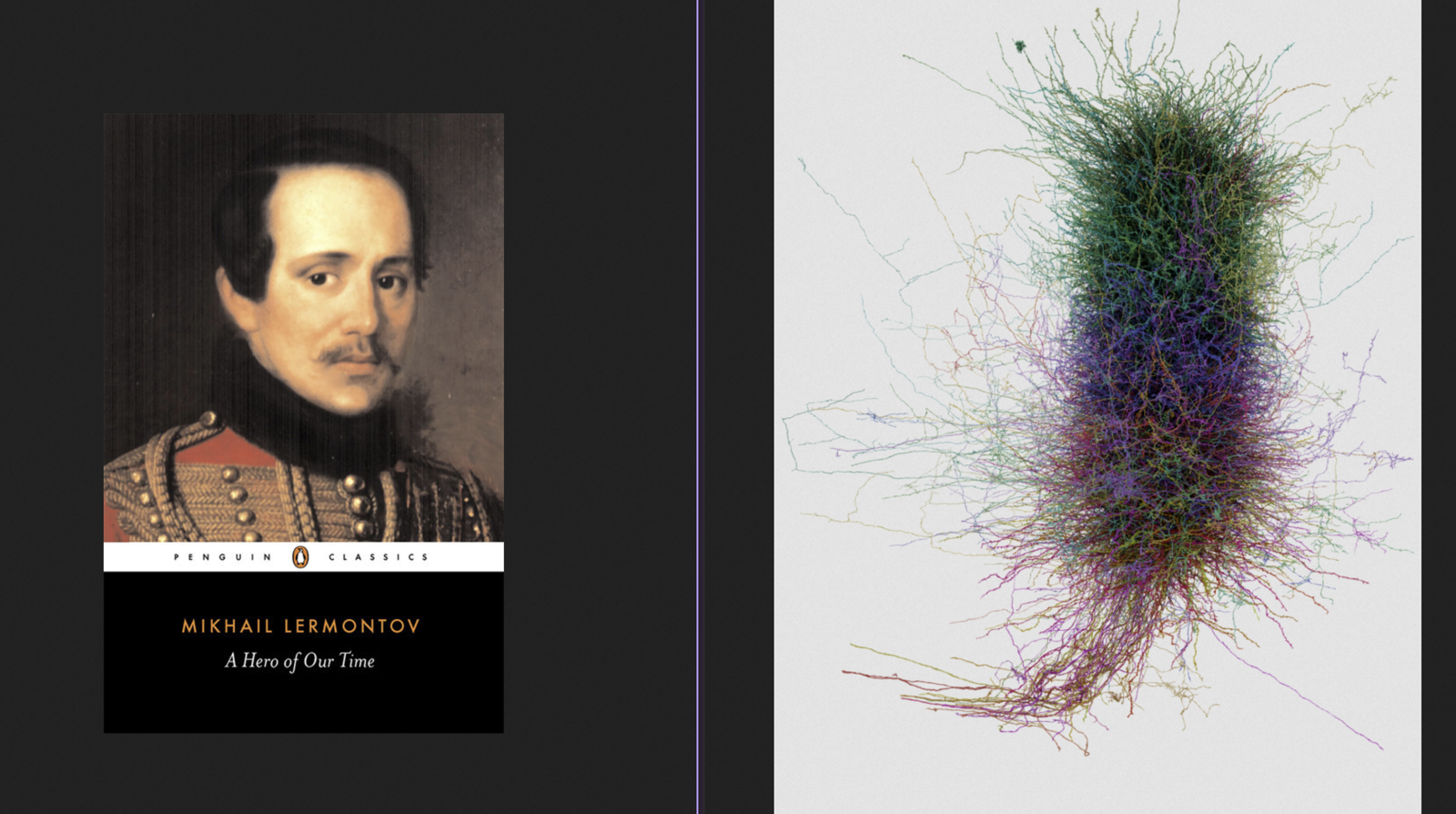
The Forebrain & High Cognitive Self Modeling Unto Species Systems Revolution
David Bussell · November 8, 2026
4. The Resolution of Experience and Perception: The Emergence of the Forebrain as the Locus of Being (11/9/26 Lecture) — as first posted on its own, 2026-11-09: https://davidbussellarchive.substack.com/p/the-resolution-of-experience-and
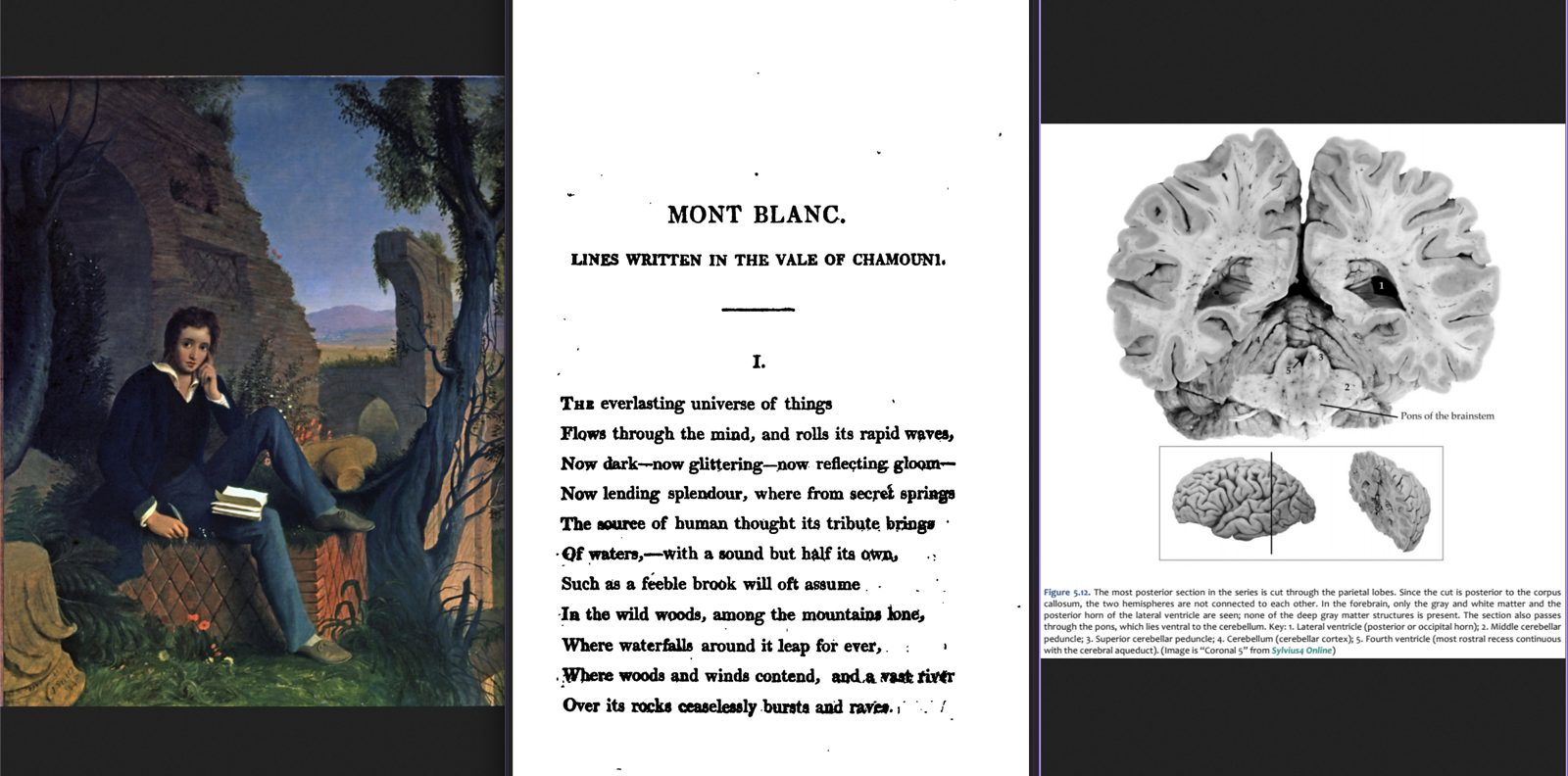
5. Experiencing the Self Architectonically: The Evolutionary Architecture of Subjectivity (Lecture -- 11/9/26) — as first posted on its own, 2026-11-09: https://davidbussellarchive.substack.com/p/experiencing-the-self-architectonically